Historical Background
According to legend, Daun Penh, a wealthy woman, founded Wat Phnom in 1372 after discovering sacred Buddha statues inside a tree that had washed ashore along the river. She built a small shrine on a nearby hill to protect the statues, giving rise to the name Phnom Penh. Over the centuries, the temple has been rebuilt and restored several times, becoming an important symbol of the city’s history and identity.
Architecture and Layout
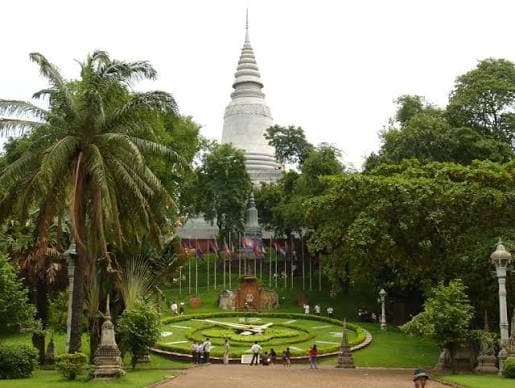
Wat Phnom features a main shrine believed to house the remains of King Ponhea Yat, who established Phnom Penh as the capital in the 15th century. The temple is reached by grand stairways guarded by lion and serpent statues, while colorful murals depict stories from Buddhist traditions. Several smaller shrines surround the main temple, and from the top of the hill, visitors can enjoy beautiful views of Phnom Penh.
Cultural Significance
Wat Phnom is an important place of worship and a gathering point for Cambodians, especially during major celebrations such as Khmer New Year and Pchum Ben. More than a historic temple, it is a symbol of Phnom Penh’s origins and reflects the deep connection between Cambodian culture, history, and religion.
Tourism and Preservation
Wat Phnom is both a sacred place of worship and a peaceful public park, making it an important landmark for locals and visitors alike. Efforts to preserve its historic paintings, statues, and architecture help protect the site’s cultural heritage while allowing people to continue using the temple for prayer and religious traditions.