Historical Highlights
The Giant Buddha: In the 16th century, the temple’s western wall was transformed into a massive 70-meter-long reclining Buddha. One of the largest of its kind in the region, the figure is carved into the stone structure and can be difficult to recognize at first.
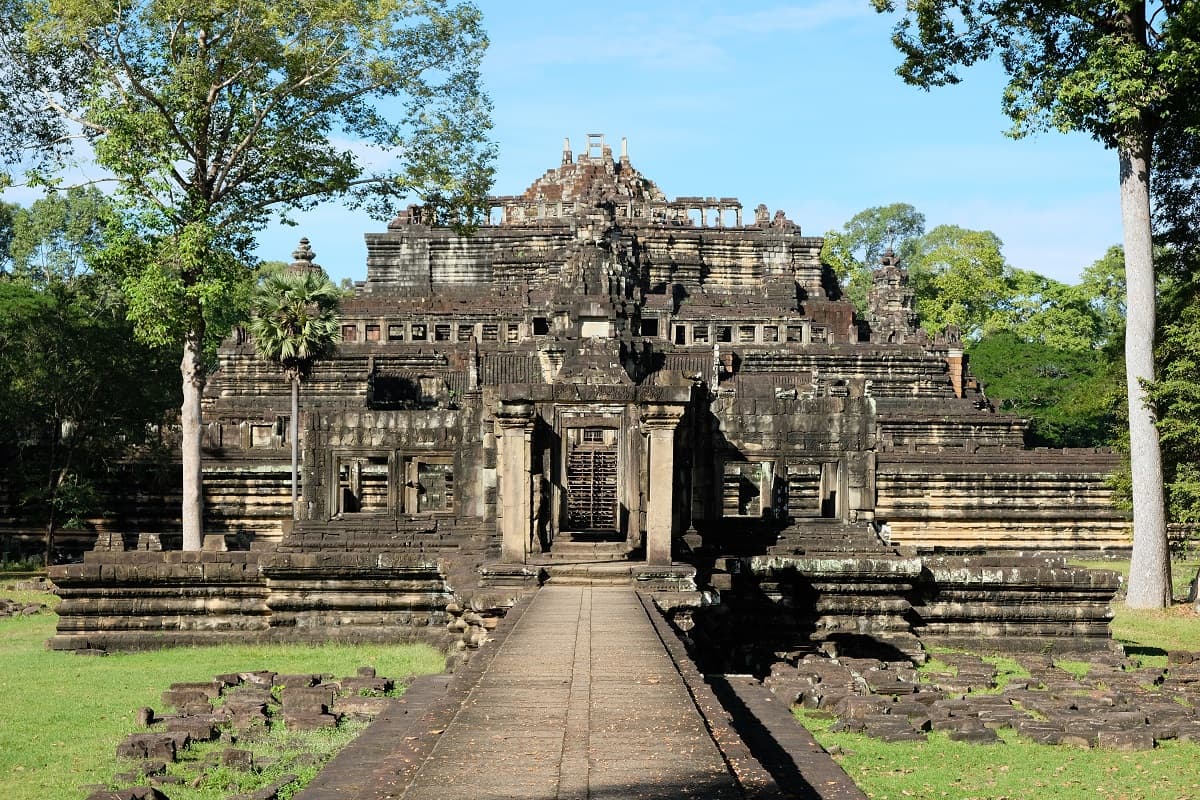
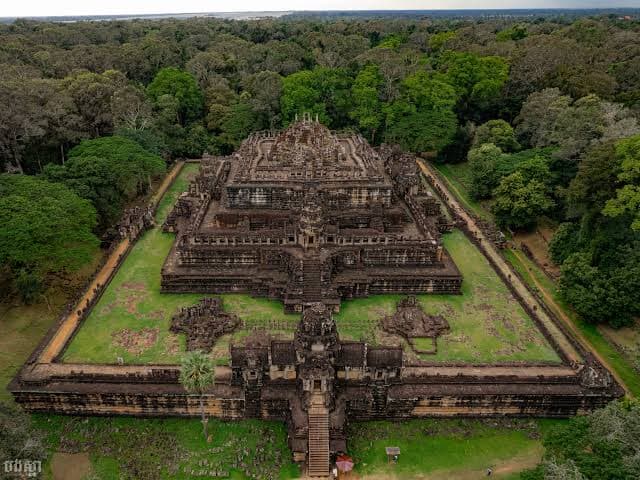
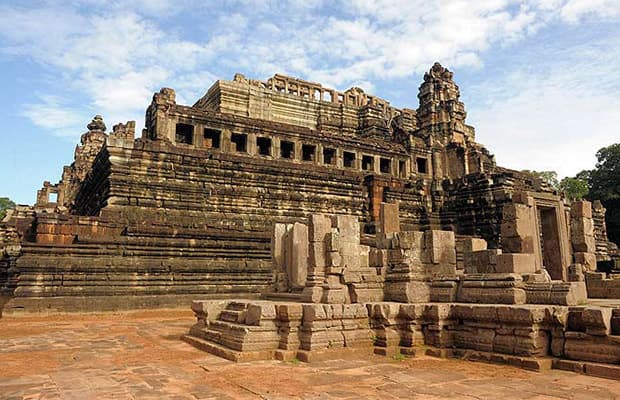
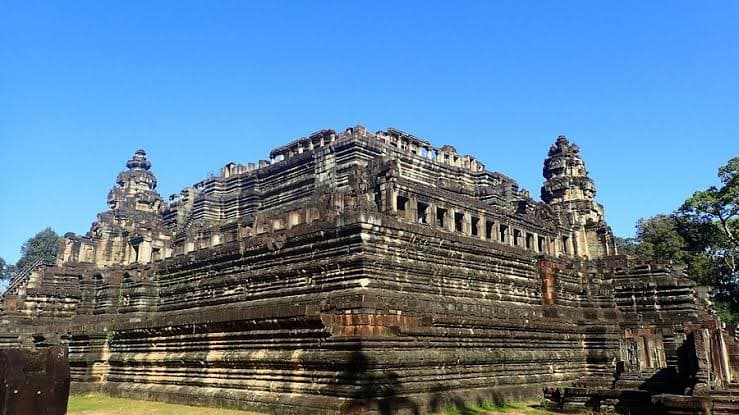
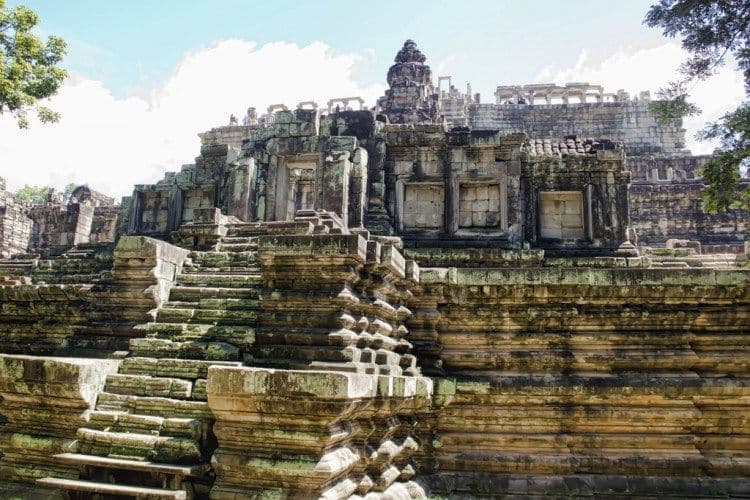
Symbolism: Like many Khmer temples, Baphuon was designed to represent Mount Meru, the sacred center of the universe in Hindu and Buddhist traditions, symbolizing the connection between heaven and earth.
The “World’s Largest Jigsaw Puzzle”
Baphuon is famous for one of the most remarkable restoration projects in history. In the 1960s, archaeologists carefully dismantled the temple, separating nearly 300,000 stones to repair its unstable foundation. During the Cambodian Civil War, the records showing where each stone belonged were destroyed. As a result, experts had to solve an enormous archaeological puzzle to rebuild the temple. After nearly five decades of painstaking work, the restoration was finally completed in 2011.
Architecture and Design
The Causeway: Visitors enter Baphuon along a magnificent 200-meter-long raised stone causeway, offering a striking approach to the temple and one of the most memorable walks in Angkor.
Carvings: The temple walls feature delicate carvings and detailed panels depicting scenes from Hindu mythology, including stories from the Ramayana, showcasing the skill and artistry of Khmer craftsmen.
Visitor Tips
Location: Baphuon is conveniently located near the Bayon Temple and the Terrace of the Elephants, making it easy to include in an Angkor Thom visit.
The Climb: Visitors can climb to the upper levels for beautiful views, but the stairs are steep, so take care and climb slowly.
Opening Hours: Open daily from 7:30 AM to 5:30 PM. An Angkor Pass is required for entry.