History and Significance
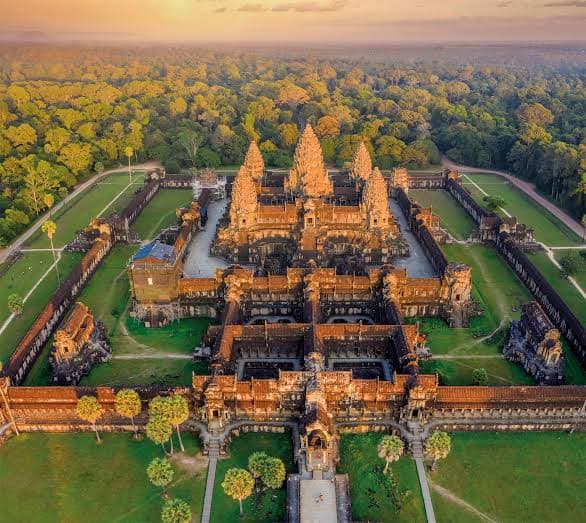
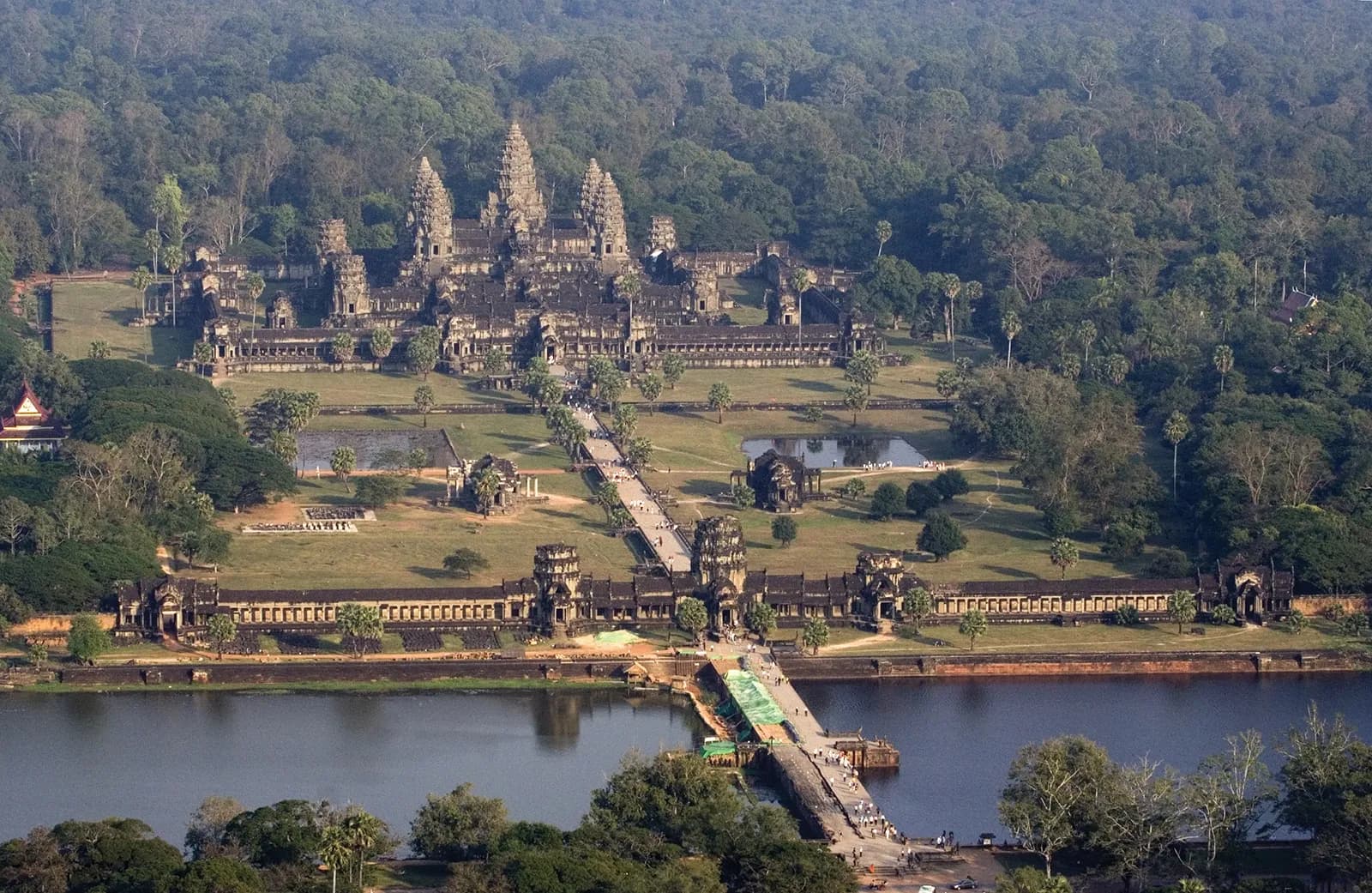
Built in the early 12th century by King Suryavarman II, Angkor Wat was originally dedicated to the Hindu god Vishnu before becoming a Buddhist temple. Its grand design symbolizes Mount Meru, the sacred home of the gods in Hindu and Buddhist traditions.
Architecture and Design
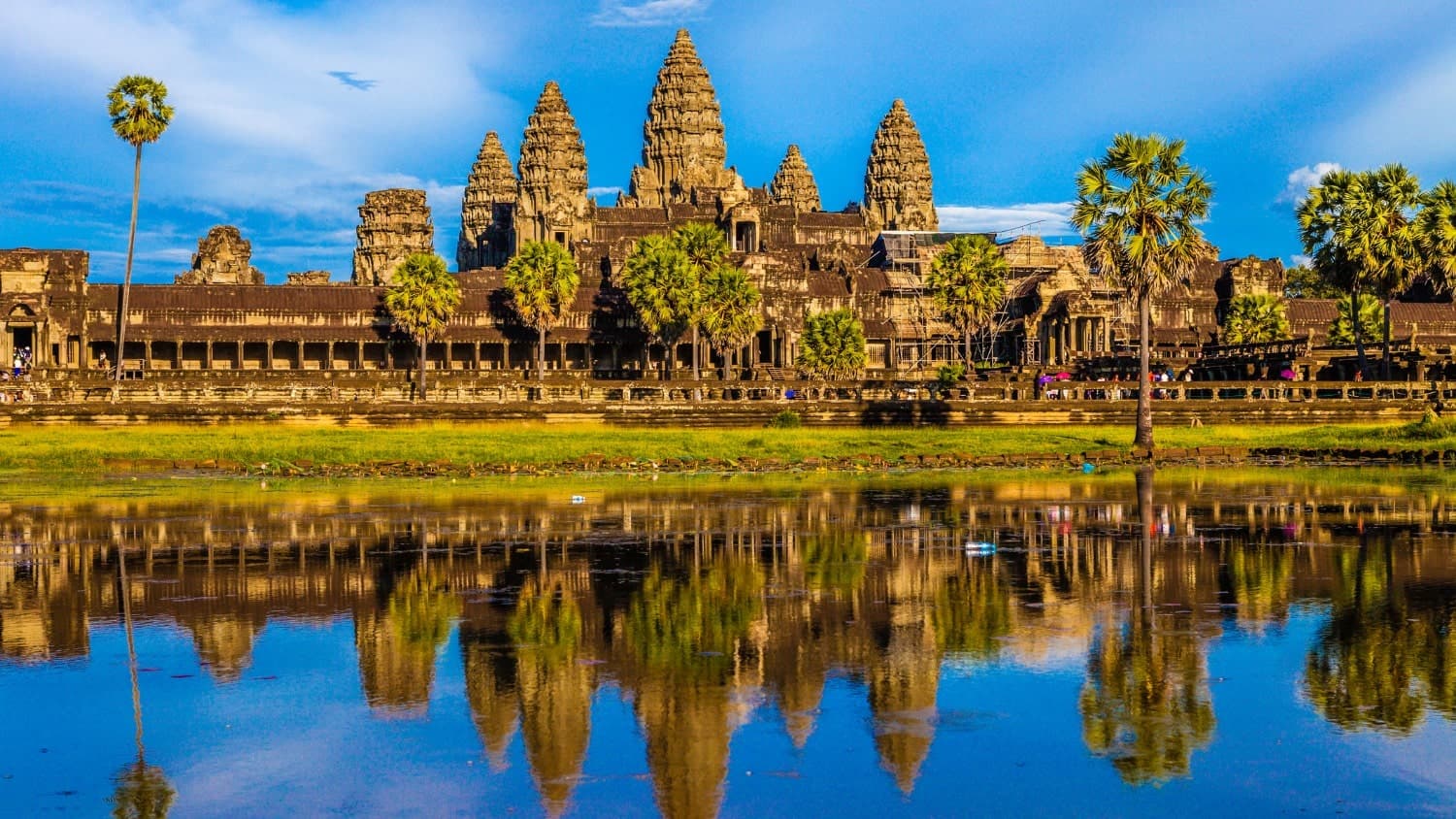
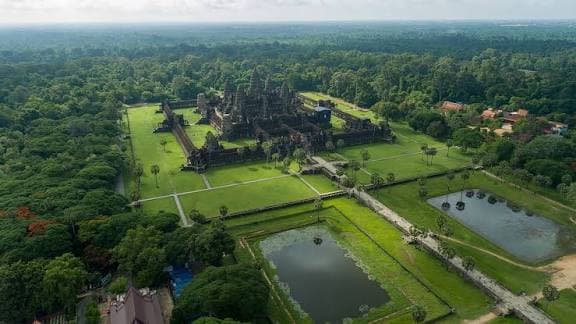
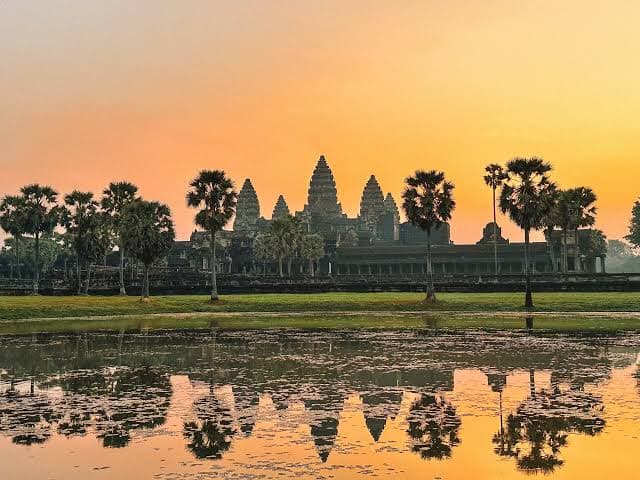
Angkor Wat is renowned for its perfect symmetry and five majestic towers shaped like lotus buds. A wide moat surrounds the temple, creating the famous reflection seen at sunrise, while its walls are decorated with intricate bas-reliefs depicting ancient battles, Hindu legends, and scenes from epic stories.
Tourism and Impact
Angkor Wat is a major attraction that draws millions of visitors to Cambodia each year, supporting local jobs and businesses in Siem Reap. Visitors can experience its beauty by watching the sunrise, exploring the temple by bicycle, or joining knowledgeable local guides.
Preservation
As a UNESCO World Heritage Site, Angkor Wat is carefully protected through ongoing conservation efforts by Cambodian and international experts. Their work helps preserve its ancient carvings, architecture, and water systems for future generations to experience and appreciate.